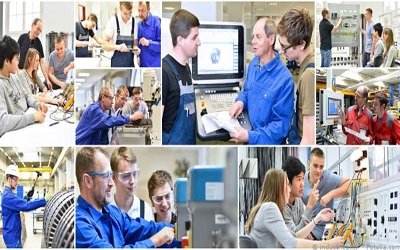
Vocational Training in Germany – Your Springboard to a Successful Future
Introduction:
Vocational training in Germany offers young people and international talent the opportunity to learn in a hands-on environment, gain valuable work experience, and acquire solid professional knowledge. The dual training system, which combines theoretical lessons at vocational schools with practical work in companies, is recognized worldwide as a model system. For international professionals and students, vocational training in Germany is an ideal entry point into a successful career.
1. Diverse Vocational Training Opportunities
Germany offers training programs across a wide range of industries and professions:
Technology & IT: IT specialist, mechatronics technician, electronics technician, PLC programmer.
Healthcare: Nursing professional, general and pediatric care, physiotherapy.
Trade & Management: Retail salesperson, wholesale and foreign trade, office and administrative professions.
Crafts & Industry: Metal and mechanical engineering, construction, chemistry, and food industry.
2. Benefits of Vocational Training in Germany
Hands-on Learning: Apply theoretical knowledge directly in companies.
International Recognition: German vocational training is highly regarded worldwide.
Career Opportunities: Good chances of being hired by the training company or smooth transition to university studies.
Financial Support: Training allowances, subsidies, and in some cases social benefits.
3. Requirements for International Applicants
Completed school education (Abitur or equivalent).
Motivation and interest in the chosen field.
German language skills (often B1/B2 for vocational school and practical training).
Willingness to adapt to a new cultural and professional environment.
4. Support During Vocational Training
Many organizations and companies provide support for international trainees:
Assistance with finding accommodation and organizing daily life.
Language courses and cultural orientation programs.
Guidance through administrative procedures and recognition processes.
Continuous support throughout the training period to ensure a smooth start in Germany.
5. Future Prospects
After successfully completing vocational training, numerous opportunities open up:
Direct entry into the job market in Germany or internationally.
Further training and professional development in the chosen field.
Possibility to pursue higher education or specialize professionally later on.
Conclusion:
Vocational training in Germany is more than just a career start – it is a springboard for a successful professional future. For international talent, it provides not only practical knowledge but also long-term career opportunities in one of the world’s leading economic nations.